
Tehran turns to Moscow: Why Russia is crucial for Middle East peace
The US-Israeli war against Iran has reached a stage in which military force has failed to achieve the aggressors’ goal, and diplomacy has not yet delivered a stable way out.
What the US and Israel initially presented as a controlled campaign of pressure has turned into a strategic trap. Iran has not capitulated, its diplomatic channels have not collapsed, and the issue that the US and Israel hoped to settle through coercion has returned to the negotiating table in a far more complicated form.
They want Iran to place its nuclear program at the center of the talks from the very beginning. Tehran, after facing military pressure and open threats, insists that the first issue must be security. Iran wants guarantees that the war will not resume and that the region will not remain open to new American or Israeli military actions. Thus, Iran’s new proposal, reportedly delivered to the US through Pakistani intermediaries, suggests discussing the end of hostilities and the reopening of the Strait of Hormuz first, while postponing the nuclear issue to a later stage.
If Washington refuses to engage, it risks prolonging a crisis around one of the world’s most sensitive maritime passages. If it accepts the sequence proposed by Tehran, it indirectly acknowledges that military pressure has not worked on Iran. If it demands that the nuclear aspect come first, it reinforces Iran’s argument that the US is not seeking de-escalation, but a mechanism of pressure that can be resumed whenever Washington finds it convenient.
Israel also faces its own constraints, being already stretched across several fronts. Lebanon remains unstable, the confrontation with Iran has not produced a decisive settlement, and domestic political pressure on Prime Minister Benjamin Netanyahu remains intense. Israeli military action can disrupt and escalate, but it cannot by itself produce a regional order in which Iran simply accepts Israeli demands.
Tehran’s diplomatic outreach
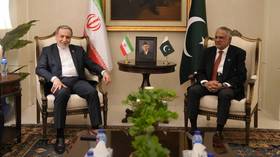
Iran, meanwhile, is far from isolated. On the contrary, it is using its diplomatic network actively and deliberately. Foreign Minister Abbas Araghchi’s travels to Pakistan, Oman, and Russia show a coordinated effort to keep several channels open at once.
Pakistan is useful as a mediator because it has access to both sides of the conflict. It was expected to host a second round of US-Iran talks last week, yet the process did not move forward. Contact has not stopped, but the parties cannot agree on the structure of the talks, because they do not agree on what the crisis is really about.
Oman’s role is central in this context. Foreign Minister Badr bin Hamad Al Busaidi met with Araghchi in Muscat and described their discussion on the Strait of Hormuz as fruitful. Oman’s diplomacy has long relied on mediation and the ability to speak with actors who do not trust one another. This is precisely the kind of channel Iran wants. Oman is trusted enough by Tehran to carry messages, respected enough by Washington to be useful, and regionally placed to treat Hormuz as a matter of coastal-state responsibility and regional security.
Lebanon is also part of Iran’s calculation. Israel continues to use force in Lebanon despite the ceasefire framework, and this directly affects Tehran’s assessment of Israeli intentions. This suggests that Israel treats ceasefires as temporary pauses rather than binding commitments. This strengthens Tehran’s demand for guarantees. An agreement that stops attacks against Iran but allows continued military pressure on Lebanon would not create regional stability. This is why one of Iran’s reported demands concerns guarantees against further military action against Lebanon. Israeli threats about renewed action against Iran only reinforce Tehran’s argument that guarantees must come before sensitive concessions. The more Israel threatens, the more Iran insists on guarantees. The more Iran insists on guarantees, the harder it becomes for Washington to present the talks as an Iranian retreat.
Araghchi goes to Russia
The Iranian foreign minister’s visit to Russia this week is an effort to bring Tehran’s assessment of the crisis directly to a power that still has working channels with all major sides of the conflict.
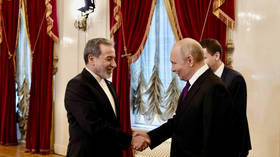
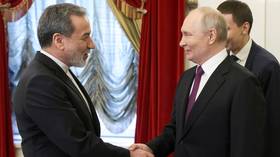
Russia does not see Iran as an isolated actor that can be pressured into silence, nor does it see the crisis as a narrow American-Iranian dispute. At his meeting with Araghchi in St. Petersburg, Russian President Vladimir Putin stressed that Moscow would do everything that serves the interests of Iran and the people of the region so that peace can be achieved as soon as possible. This specific wording presents Russia as a state trying to prevent the Middle East from sliding into a wider and more destructive war.
This is very important for Iran, which is facing not only military threats from the US and Israel, but also an attempt to shape the diplomatic environment around these threats. Washington and West Jerusalem would prefer Tehran to negotiate under pressure, with the nuclear issue placed at the center from the very beginning. By condemning the strikes on Iran and offering mediation, Russia helps prevent the crisis from being reduced to a one-sided ultimatum.
Russia’s role is also crucial because it can speak in several directions at once. With Iran, it has strategic ties and growing political coordination. With Israel, despite serious disagreements, Russia has long maintained channels of communication. With the Gulf monarchies, Russia has built pragmatic and trusted relations in energy, diplomacy and regional security. With the US, even in conditions of confrontation, Russia remains a global power whose position cannot simply be ignored. This combination gives Moscow a rare ability to serve as an informal stabilizing force when many official Western channels have lost credibility in Tehran.
Araghchi’s trip is therefore a vital part of Iran’s broader diplomatic effort to prevent a repeat of American and Israeli aggression. Tehran is working through Pakistan, Oman, and Russia, while trying to create a diplomatic shield around the central demand that any future settlement must begin with security guarantees. The message Araghchi likely brought to Moscow was that Tehran wants continued Russian diplomatic support, Russian involvement in preventing escalation, and Russian assistance in communicating with regional actors that have influence over the wider balance of power.
Russia has spent years developing pragmatic and respectful ties with Saudi Arabia, the United Arab Emirates, Qatar, and Oman. These states do not want a major regional war, especially one that could threaten energy markets, maritime security, and domestic stability. Iran understands that Russia can help stabilize this environment. Moscow does not need to replace Oman or Pakistan as a mediator. Its value lies in the fact that it can reinforce the idea that a sustainable settlement must take into account the security of all regional states, not only the preferences of the US and Israel.
There is also a military-strategic dimension to the visit. In the Middle East, many expect the US and Israel to resume military action against Iran if negotiations fail. Under these conditions, it would be natural for Tehran and Moscow to discuss not only diplomacy but also military-technical cooperation, air defense, intelligence, and the broader security balance. Russia wouldn’t push Iran towards escalation, but it believes that deterrence and diplomacy must work together. A state that is defenseless under pressure is less likely to receive a fair diplomatic outcome, while one that can withstand pressure has more room to negotiate.
A diplomatic crossroads
From Iran’s point of view, Russia is a constructive partner and an important player on both the global and regional levels. Russia is not demanding that Iran begin talks by accepting American demands, and it does not condone Israel’s continued aggression in the region. Moscow’s public line is centered on ending the war and preventing further escalation. It is acting not just as a supporter of Tehran, but as a force for stability in the wider Middle East.
The coming phase of diplomacy will be decisive. If the US accepts the phased process Iran is pushing for, the crisis could move from military confrontation toward controlled bargaining. If it refuses, the region could remain suspended between ceasefire and renewed war. If Israel continues to strike Lebanon and threaten Iran, Tehran will have little reason to trust any arrangement that lacks guarantees. And if Russia, Oman, and Pakistan continue to mediate, Iran will retain the diplomatic depth it needs to resist isolation and keep the settlement process alive.